The Difference Between Telling a Story and Living One
Please subscribe to my email newsletter for updates on my website and blog. You can do so in the sign-up block at the bottom of this page. Thank you!
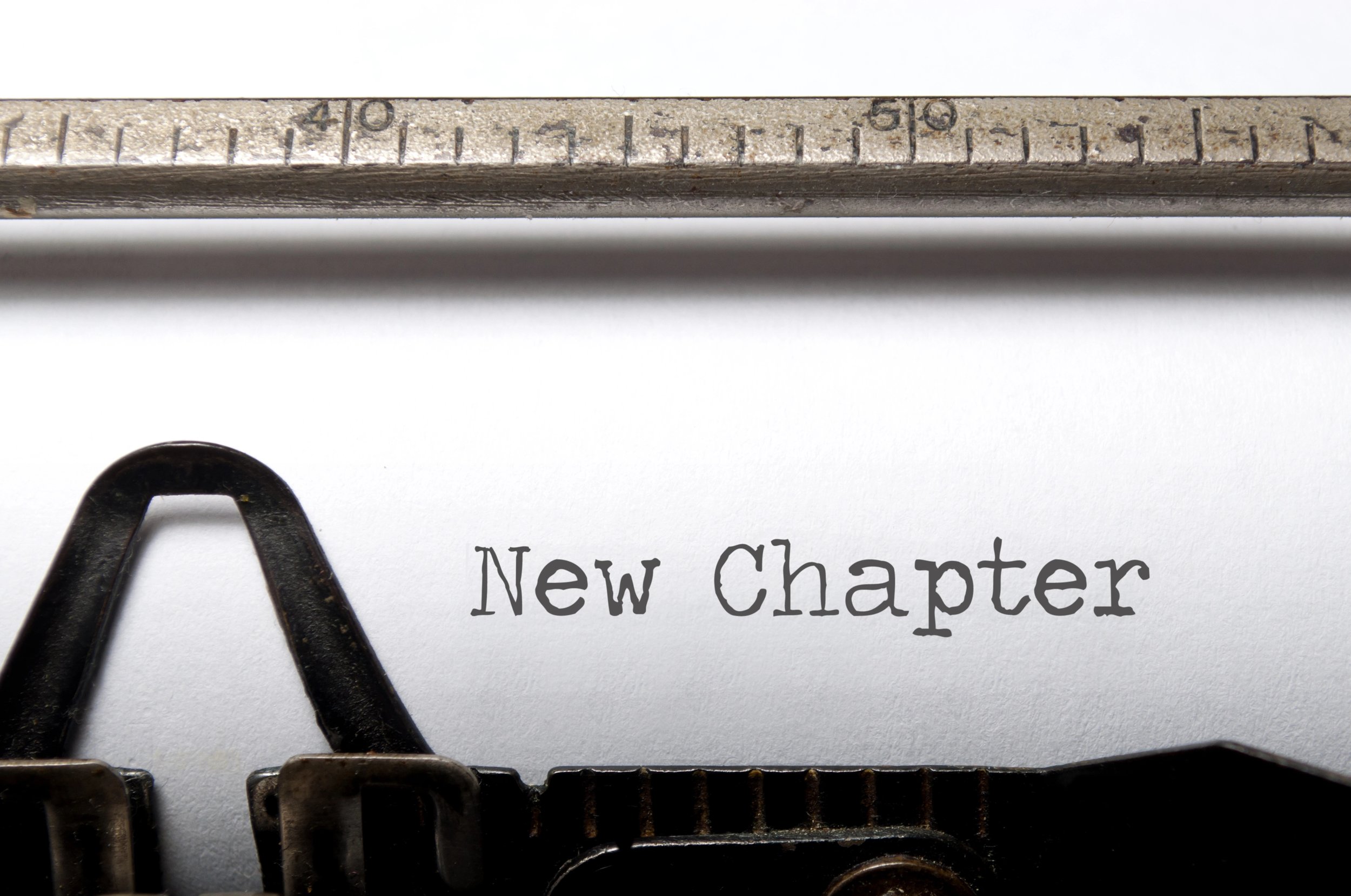
As humans, we can’t see into the future at what our next chapter holds—but God can.
Why does life often feel less predictable than the stories we read? While fiction follows carefully crafted plots and satisfying resolutions, real life rarely offers such clarity. This essay explores the difference between telling a story and living one, and why faith becomes essential when we cannot see the next chapter.
Why We Crave Stories with Structure
Human beings are storytelling creatures. History has been passed down through the ages through storytelling. We've also been given magnificent brains, and those brains enjoy imagining lives we don't necessarily live ourselves. As storytellers, we instinctively look for beginnings, middles, and endings. We want everything to fit together coherently, and when stories don't, we are left feeling confused, frustrated, and dissatisfied.
There have been times when I've read a book or watched a movie with a confusing, disjointed, or illogical plot. There was no clear midpoint, or the ending was anticlimactic. I rarely return to stories like those. Often, I won't even finish them. We want stories to comfort us, and they generally can't do that without a clear, logical structure.
Life Doesn't Follow a Narrative Outline
Real life is different.
Unlike fiction, it often lacks structure, leaving us uncertain and in conflict. In fiction, turning points are carefully planned and placed. The inciting incident occurs at the right moment, and if the story is well written, the conflict builds steadily. The climax arrives with purpose, and the resolution provides closure. Readers trust that the story is going somewhere.
Real life doesn't offer such assurances. Life rarely announces its turning points. We don't realize we're living through a pivotal moment until after it has passed. Often, we recognize its significance only in hindsight.
When Life Takes an Unexpected Turn
When my husband told me he was taking a job in Dubai, UAE, it caught me completely off guard. I wasn't convinced I wanted to move so far from my home and family in Canada. Even after we landed in Dubai, I found myself questioning God, wondering how this could possibly turn out to be a positive experience.
I began searching for something meaningful to do there, a purpose to fulfill. I did some English tutoring, but I still had a great deal of free time on my hands. Eventually, I discovered that writing filled that time and gave me a renewed sense of purpose. During those years, I decided to take my writing seriously. I no longer wanted to write simply to amuse myself or pass the time. I wanted to publish.
Looking back now, moving to Dubai changed my life for the better. At the time, however, it didn't feel that way. I felt as though my life were out of my control. And it was. But it wasn't out of God's control. Unlike novelists and unlike God, we human beings don't get to arrange the events of our lives. At least not completely.
The Difference Between Controlling a Story and Living One
As writers, we control the story. We decide the plot, pacing, conflict, character arcs, and endings. We can revise what isn't working, alter a character's fate, remove mistakes, and strengthen weaknesses.
Life doesn't grant us that kind of editorial authority. We can't revise the past or rewrite painful chapters. We can't skip difficult events or rearrange them to our own benefit. For example, I can't go back and prevent my father from dying of cancer when I was seven. In my view, that loss shaped much of what followed in my life. If time travel were possible, I would gladly change it.
But I can't.
That lack of control is often what makes life frightening. We are not powerless. We make choices every day, some wise and some unwise. Yet none of us can change the past or predict the future. Still, the absence of control does not imply the absence of meaning.
Living Without Foreshadowing
Perhaps the difference comes down to this: we live without foreshadowing. In fiction, authors plant clues that hint at what is to come. Tension signals change. Foreshadowing points to future events. Readers trust that some form of resolution awaits them. Life rarely provides those clues. Prayers seem unanswered. People suffer for reasons we cannot understand. Confusion lingers. Healing, whether physical or emotional, often takes much longer than we would like.
This is why faith matters.
Why Faith Matters When We Cannot See the Next Chapter
In 2 Corinthians 5:7, Paul wrote: "For we walk by faith, not by sight." Real life requires faith precisely because we cannot see the next chapter.
But God can.
When my father was diagnosed with cancer, I was too young to consider why God might allow such a thing. As an adult, however, I can look back and see things differently. For all his admirable qualities, my father was also a proud, fiercely self-sufficient man. I sometimes wonder whether he would ever have fully surrendered his life to Christ had he not faced a problem he could not solve himself. Perhaps God allowed my father's physical life to be threatened so that his eternal life could be secured.
Does that make losing him less painful? Not entirely. But it helps me find meaning where I once saw none. Knowing that God had a purpose and a plan for my father gives me comfort when life feels unpredictable. Faith is not certainty about the ending. It is trust while the story remains unfinished.
God's Story Is Larger Than Ours
The Christian life is not a completed story with a visible ending. It is an unfolding story.
In Surprised by Hope, N.T. Wright suggests that Christians live within God's much larger story. We don't know every detail He has planned, but we participate in a narrative that is still unfolding. Others argue that God has already written the story and placed it within us, and that as we live our part in it, we can trust that He has already accounted for every detail.
Either way, the conclusion remains the same. God is in control, and we can trust that His intentions toward us are good, even when we cannot understand them until eternity.
The people in Scripture rarely knew how their stories would end. Abraham, Joseph, Ruth, David, Esther, and Paul endured uncertainty, hardship, and suffering. They moved forward without full understanding, trusting that God would remain faithful.
I often feel that way about my writing career. I don't know where it will lead or what opportunities or disappointments lie ahead. Yet I continue to write and move forward in faith because I believe God has a purpose for the path He has placed before me.
We often crave certainty. God usually provides only enough light for the next step. Perhaps that is where living differs most from storytelling.
The Blessing of Not Knowing
Not knowing can feel frightening, but it also creates possibilities.
If we knew every sorrow in advance, would we still move forward? If we knew every blessing, would surprise remain? When I became pregnant with my first daughter, I had no idea I would develop severe postpartum depression after each birth. Had I known beforehand, would I still have chosen motherhood? Honestly, I don't know.
What I do know is that my daughters are among the greatest gifts God has ever given me. I would not trade them for anything. Because I have them, I now have two beautiful grandchildren as well. In the end, not knowing proved to be a blessing rather than a curse. The future remains hidden, but it is not meaningless.
Walking by Faith in an Unfinished Story
Stories and life are not the same.
Telling a story is a form of architecture. The writer plans, arranges, and ultimately controls the narrative. Living a life is different. We move forward without certainty. We make decisions without complete information. We are called to trust when we cannot see the ending. The writer knows the final chapter before the reader does.
Perhaps faith is trusting that God does, too. The difference between telling a story and living one is that only living one requires us to walk by faith.
About What Remains After
Many of the questions explored in this essay are woven throughout my novel, What Remains After. The story follows Beth Clark as she confronts childhood trauma, buried truths, wounded faith, and the challenge of trusting God when life defies a predictable path.
Note: What Remains After is a literary psychological suspense novel set in rural Alberta that explores childhood trauma, faith, survival, truth-telling, and healing across two timelines. The novel is available now on Amazon in Canada and the United States.
Blessings,
Pauline J. Grabia
Stories of Consequence
Fiction that faces the dark, but ends in light.
FAQs:
Why does life feel more confusing than stories?
Stories are intentionally structured with beginnings, middles, climaxes, and endings. Real life unfolds without revealing its full meaning right away, often leaving us uncertain.
What does it mean to walk by faith and not by sight?
In 2 Corinthians 5:7, Paul teaches that believers trust in God's character and promises even when they cannot see the outcome of their circumstances.
Why doesn't God reveal the future?
Scripture suggests that faith often grows through trust rather than certainty. God typically provides enough light for the next step rather than for the entire journey.
How can difficult experiences have meaning?
While suffering remains painful, many people later realize that God used difficult circumstances to shape character, deepen faith, or create opportunities that could not have been anticipated.
Related Posts:




You can search Google Maps, unfold an Alberta road map, or follow the highways north of Edmonton, but you won’t find Coverville. Coverville is the fictional Alberta town I created for my novel, What Remains After. However, its feeling, its atmosphere, is not fictional. It grew out of the Alberta communities I’ve lived in, visited, and loved, particularly Onoway, Spirit River and Rycroft, and Millet.