What Happens After the Worst Thing? The Questions at the Heart of What Remains After
Please subscribe to my email newsletter for updates on my website and blog. You can do so in the sign-up block at the bottom of this page. Thank you!

AI-generated image of a path leading out of darkness to the light.
What happens after the worst thing has already happened? What Remains After explores the difficult questions that follow trauma, including faith, forgiveness, healing, and God's grace. This essay reflects on the central question at the heart of my novel and why the aftermath of suffering matters as much as the suffering itself.
What Happens After the Worst?
Most stories in modern literature focus on the crisis moment and the great emotional reveal: the crime and the confrontation between the protagonist and the antagonist, the disaster or the escape from it. But eventually, another question naturally emerges:
What happens afterward?
I was a young mother at the time of 9/11. After the terrorists carried out their attacks, bringing down three buildings, crashing four planes, and killing thousands of people, I was in shock. A few days passed, and as the shock began to fade, I found myself asking a different question.
What happens now?
How does the American government find the people responsible, punish them, and ensure it never happens again? What happens to those who lost loved ones in the attacks? What happens to those who survived and must now live with the trauma they experienced? What happens to me, as a witness to these horrors? How do I react, process, and respond?
That was a real historical event.
But even after a fictional crisis, the most important question is not simply, "What happened?" but rather, "What remains after it happened?"
That question became the beating heart of my novel, What Remains After.
The Question Beneath the Plot
On the surface, What Remains After is a literary psychological suspense novel. It contains secrets, an investigation, buried truths, trauma, danger, and confrontation.
But beneath the plot, the novel asks a deeper question. What remains after the harm? In other words, what remains after the main character experiences abuse, betrayal, neglect, silence, and community failure?
When I first drafted the story, I didn't recognize this question. It wasn't until the third draft that it emerged, when I realized I hadn't truly explored the aftermath for Beth and her brother, Otto. I had to go back and write more because the novel gradually became less interested in the traumatic events themselves and more interested in what followed them.
Once that question surfaced, many others followed.
Questions That Grow Out of the Central Question
What Remains After raises several questions. Can faith survive betrayal? What happens when suffering collides with our belief in the goodness of God? Can trust in Him survive profound disappointment? Another question follows. Can forgiveness coexist with justice? When we forgive, must we also forget? Is forgetting even possible? Does grace eliminate accountability? A third question asks: Does survival equal healing? Is surviving a traumatic event enough, or is something more required before a person can truly move forward? What remains after the immediate danger has ended?
Beth wrestles with these questions years after the abuse. She thinks she knows the answers, yet she struggles to live them out. She wrestles with anger, betrayal, and the wounds left by those who should have protected her but failed. She also struggles with the silence of institutions that were either too blind or too busy to intervene.
These questions resist simple answers. Scripture wrestles with them as well.
The Light Shines in the Darkness
In John 1:5, the apostle John writes, "The light shines in the darkness, and the darkness has not overcome it." (ESV) This verse does not deny the existence of darkness. It acknowledges that suffering, evil, grief, and brokenness are real.
The promise is not that darkness never comes. The promise is that darkness does not ultimately win.
I can speak personally about how darkness has entered my own life. Childhood abuse and neglect. My father's death from cancer when I was nearly eight years old. Years of bullying at school. Even today, darkness still tries to encroach. Depression. Discouragement. Relationship struggles. The loss of loved ones.
Yet through it all, Scripture reminds me that darkness never has the final word. God is the victor, and I belong to Him. That truth sustains me until His light once again breaks through the darkness.
What Remains After takes darkness seriously. Beth encounters much of it. Yet her story refuses to allow darkness the final word. That creates an essential tension.
Grace Does Not Erase the Past
That tension arises because survivors often want redemption to function like deletion. We want the wounds erased. The memories removed. The consequences undone. But that is rarely how healing works.
Romans 5:20 tells us, "Where sin increased, grace abounded all the more." (ESV) Paul does not suggest that sin never happened. He does not deny the pain it caused. Instead, he declares that God's grace is greater.
Grace does not erase history. It redeems those who must continue living within it.
I have not forgotten my own past. There is no denying what happened. Nor have I been instantly healed. Instead, God's grace has continued working through those experiences, and it continues to work in me today. I've learned to accept my memories without allowing them to define my future. I've learned to keep them in the past without pretending they never existed. I've also learned that forgiveness is a process.
My recovery remains ongoing. Perhaps it always will. But I know this: God is not finished with me. He walks this road with me. That is the wonder of His grace. He takes my mustard-seed-sized faith and grows it into something He can use, both to continue healing me and to use me for His glory.
This is also true for Beth and Otto. It is here that the novel's deepest paradox emerges.
The Difference Between Healing and Erasing
What Remains After is not interested in pretending trauma leaves no scars. The very idea is unrealistic.
Beth cannot simply forget what happened to her and move on without consequences, nor can she become the same person she was before the abuse began. Healing requires years of struggle because it is rarely linear.
Healing involves acknowledging the truth with courage and lament. It also involves community, being heard, being believed, receiving help, and being loved well. In other words, it requires an abundance of grace. Redemption is not the absence of scars. It is learning to live faithfully and fruitfully despite them.
I still carry deep scars. Some hurts remain. Occasionally, I still have nightmares. But those scars also remind me how much healing has already taken place and how faithfully God has carried me. Today, they have become reminders of grace, forgiveness, perseverance, and God's faithfulness.
Which brings us back to the original question.
What Actually Remains?
What remains after the harm has been done? After survival? After life begins again on the other side of tragedy? Not all the answers are obvious.
Many things remain. Memories. Long-term consequences. Loss. Grief. Unanswered questions.
But other things remain as well. Truth. Endurance. Courage. Faith, though sometimes wounded. And, above all, God's limitless grace.
My novel does not argue that suffering is good. It asks instead what can survive suffering. That distinction matters.
Why the Novel Refuses Easy Answers
Some questions have simple answers. Others require patience, humility, and reflection.
What Remains After does not offer simplistic redemption for every character, instant forgiveness handed out like candy, or effortless healing. Those things would not be honest. Anyone who has experienced profound grief or trauma knows this.
I believe honesty matters, even when it is painful. Only when we honestly acknowledge reality can we begin to heal. Some questions reveal their answers only slowly. Some may not be answered fully in this life. Rather than simply observing Beth's journey, I invite readers to walk alongside her.
That leads to one final thought.
An Invitation Rather Than an Answer
What happens after the worst?
My novel explores many possibilities. Faith may be wounded without being destroyed. Truth may be buried, but never erased. Grace may be present without being simplistic. Healing is possible, though rarely immediate. It often requires both time and perseverance.
What Remains After does not answer its central question quickly. Instead, it invites readers to live inside that question. The novel does not ask readers to ignore suffering. It asks them to consider what grace can accomplish in its aftermath.
About What Remains After
The theme explored in this essay is woven throughout my novel, What Remains After. The story follows Beth Clark as she confronts childhood trauma, buried truths, wounded faith, and the challenge of trusting God when life defies a predictable path.
Note: What Remains After is a literary psychological suspense novel set in rural Alberta, exploring childhood trauma, faith, survival, truth-telling, and healing across two timelines. The novel is available now on Amazon in Canada and the United States. It is also available at Indigo in Canada and Barnes & Noble in the U.S.
Blessings,
Pauline J. Grabia
Stories of Consequence
Fiction that faces the dark, but ends in light.
FAQs:
What is What Remains After about?
What Remains After is a literary psychological suspense novel that explores what happens after childhood trauma. While the story includes mystery, buried secrets, and an investigation, its deeper focus is on the aftermath of abuse, betrayal, neglect, and community failure. Through Beth's journey, the novel asks whether faith, forgiveness, truth, and healing can survive even the deepest wounds.
Does trauma ever completely disappear?
Trauma leaves lasting scars, but it does not have to define a person's future. Healing is rarely quick or linear, and recovery is often an ongoing process. Rather than erasing the past, God's grace enables us to face it honestly, find strength to move forward, and gradually experience restoration. The scars may remain, but they can also become reminders of God's faithfulness and the healing He continues to accomplish.
Can faith survive betrayal?
That is one of the central questions explored in What Remains After. Betrayal can shake our trust in people and even cause us to question God. The novel does not pretend those struggles are easy, but it suggests that faith can survive profound disappointment. It may emerge wounded, tested, and humbled, yet God's grace remains greater than the darkness we experience.
Why does What Remains After focus on what happens after the crisis?
Many stories end when the immediate danger is over. What Remains After begins asking its deepest questions there. Rather than focusing only on the traumatic event, the novel explores the long journey of living with its consequences. It asks what remains after the abuse has ended, after the investigation is complete, and after life begins again. More importantly, it asks what God's grace can accomplish in the aftermath.
What does the title What Remains After mean?
The title reflects the novel's central question: What remains after the worst thing has happened? While trauma leaves memories, grief, and lasting consequences, it is not the only thing that remains. Truth, courage, endurance, faith, and God's limitless grace can also endure. The novel explores how healing is not about erasing the past but learning to live faithfully in light of it.
Related Posts:

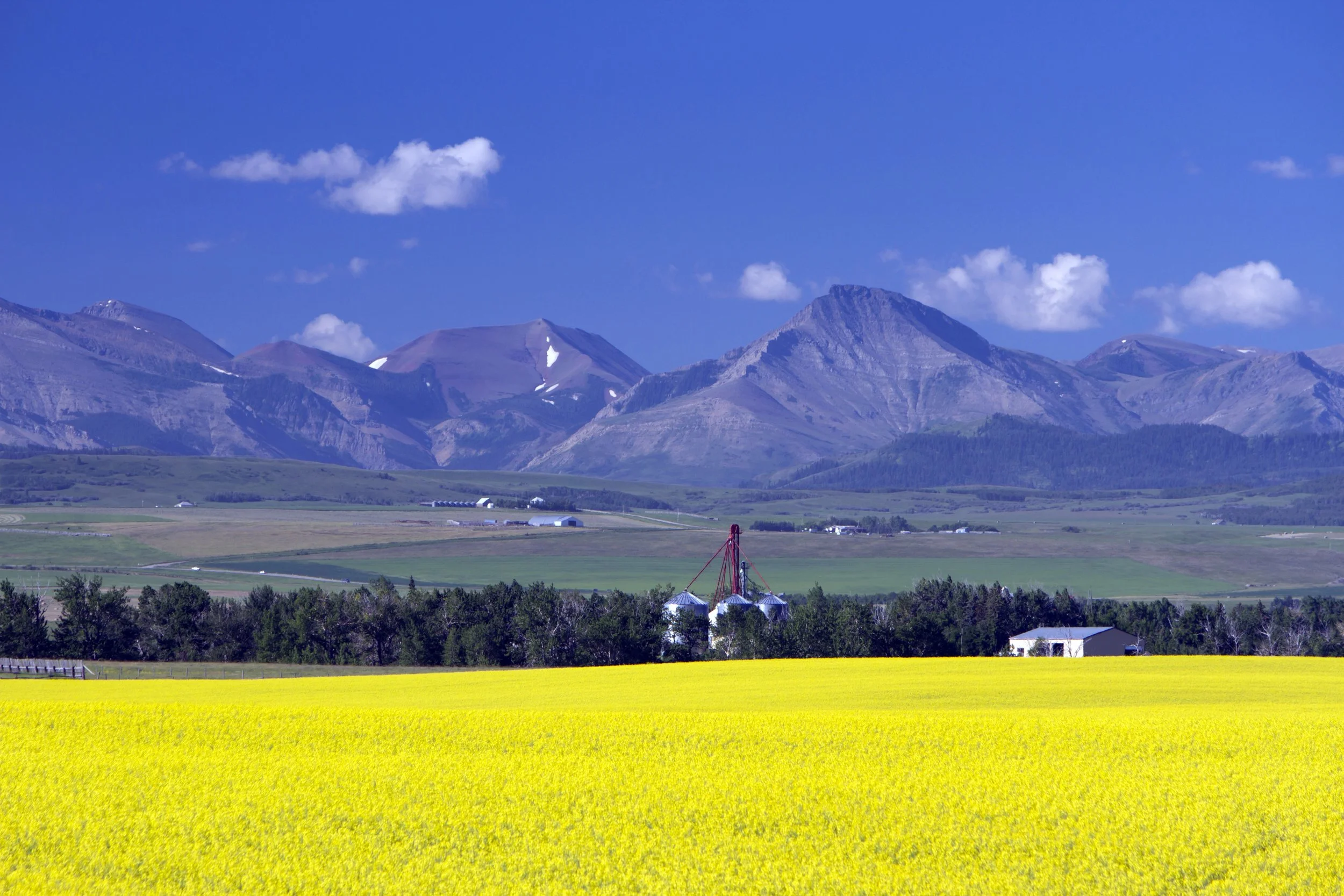


You can search Google Maps, unfold an Alberta road map, or follow the highways north of Edmonton, but you won’t find Coverville. Coverville is the fictional Alberta town I created for my novel, What Remains After. However, its feeling, its atmosphere, is not fictional. It grew out of the Alberta communities I’ve lived in, visited, and loved, particularly Onoway, Spirit River and Rycroft, and Millet.