Inside the Story Series # 3: Why Consequences Matter More Than Plot Twists
Please subscribe to my email newsletter for updates on my website and blog. You can do so in the sign-up block at the bottom of this page. Thank you!
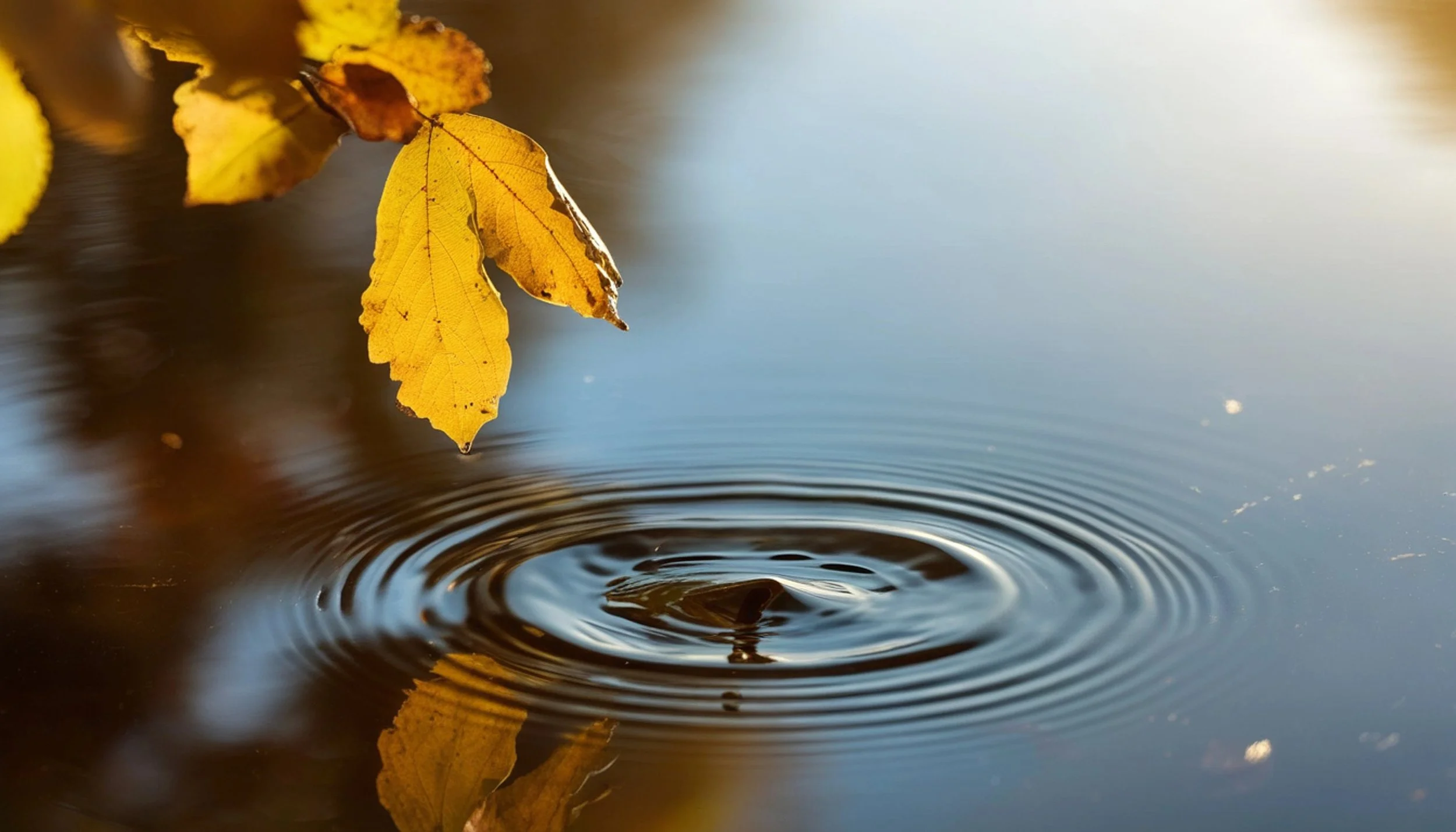
Consequences ripple outward like water rings…
This essay is the third in my new Inside the Story series, where I share the creative decisions, real-life influences, and writing philosophy behind my novels.
Plot Twists Are Clever
Have you ever finished a mystery story, admired the final twist, and then forgotten the story a few minutes later? How about a book you've read that you still remember years later? Perhaps you've gone back to it and read it repeatedly. What is the difference between these books that elicits such a different response?
I've read many, many books in my life, but few have stayed with me years later. One book that lingers is To Kill a Mockingbird. (Spoilers!) To this day, I can't forget how Atticus Finch was brave enough to stand up for an African American man against the word of a white woman in an age when that was not only considered foolish but also dangerous. Or the way Boo Radley came out of hiding at just the right moment to save the day. Its themes resonated with me, and still do.
Another book that has stayed with me is The Water Keeper by Charles Martin. I empathized deeply with the pain and loss the protagonist carried, even as he helped rescue the wounded and lost in his everyday life. The concept of the shepherd who leaves the ninety-nine to rescue the one hit deeply in my soul because I remembered being the one who needed rescue, and it didn't come.
It wasn't because the endings of these novels shocked me that they remain in my heart and mind. It was because the people, the characters, stayed with me. Their grief and fear. Their courage. Their choices and the cost of making them. That's what lingers.
A clever plot twist can surprise us, but consequences change us. That's why I didn't build my novel around asking, "What happens next?" Suspense matters, but what matters more is asking, "What happens after?" After abuse? After forgiveness? After justice and survival? That's where the real story begins.
Plot Twists Are Moments
Plot twists are effective ways to keep readers engaged. They surprise, raise tension, challenge reader expectations, and keep pages turning. Good twists have their place. I love a novel that surprises me and leaves me wanting to know what happens next.
That's why I enjoy reading books by Sandra Brown. Not for the deep themes, but for the twists and turns and surprise endings. But plot twists are mere moments in a book. And moments pass. A book that relies on plot twists without character and theme development doesn't leave the same lasting impression as a book that does.
Consequences Become Stories
I've tried to make Redemptive Realism the heart of my writing philosophy: stories that face difficult and dark concepts and themes but always point toward hope and light. Part of that means exploring the consequences of the actions my characters take. I aim for every choice my characters make to have a consequence.
Sometimes, the consequences my characters face are beautiful. In What Remains After, the Joneses' choice to observe, investigate, and act to help the Clark children escape abuse and neglect results in a better life and outcome for them than what might have happened had these ordinary heroes not acted.
But sometimes the consequences are devastating, with some lasting for generations. In What Remains After, we have a glimpse into the troubled childhood of Beth and Otto's mother, Virgie. We see how Virgie grows up to become abusive and neglectful toward her own children. This abuse later impacts the adult lives of Beth and Otto. Both Clark children struggle throughout their lives to come to terms with what happened to them and to survive and recover in their own ways.
Consequences shape these characters. The same is true for people in real life. A plot twist can change a situation or introduce unexpected information in my novel, but the consequences of characters' actions can change lives. The distinction is worth remembering and emphasizing.
Trauma Doesn't End When the Chapter Ends
In fiction, even fiction that stays with us, abuse in the story ends when the last chapter is read and the book is closed. However, it's not so simple in real life. Abuse doesn't usually disappear overnight. Grief isn't resolved in a day or a single conversation. Forgiveness doesn't erase the memory of what happened. Justice doesn't restore lost childhoods. Healing rarely follows a straight line. I know this is true in my own case.
In my stories, I try to express this by not making resolutions simple or quick. The consequences don't end for the characters the moment evil is exposed. Otherwise, their stories would feel incomplete. The consequences the characters face after the conflict or trauma are the story.
Real People Live with the "After"
That's why the title of my novel, What Remains After, matters so much. Originally, the story was titled Filling the Cracks. But after writing the novel, I didn't feel that title adequately encompassed what the book was about.
It wasn't just about righting a broken system. It was about what happens to real people after the system has failed them, after they have experienced abuse, trauma, or grief.
My novel explores childhood abuse, lies, broken trust, family secrets, death, forgiveness, tested faith, and hope rediscovered. It asks that core question: What remains after all of the above? Most of my stories share that question, though not all as centrally as this novel.
Real people live with the "after" of their trauma and grief. They can't just shut a book and make it go away. I wanted to depict that reality in the lives of Beth and Otto Clark. I wanted to capture the truth of it in fiction to reflect what is real for my readers. I hope I accomplished that.
Every Chapter Pays a Price
To make my novels as authentic as I can, I try to make the choices my characters make, and their consequences, matter. No one walks away unchanged.
The victims are altered by what happened to them and by how they decide to move forward afterward, either toward healing or despair. The offenders also face consequences for their actions. They don't simply "get away" with what they've done, even if the legal or justice system fails to hold them accountable. Their actions still carry emotional and psychological consequences.
Families are changed, either for the better or for the worse. In What Remains After, Beth and Otto experience both the worst and the best of what family can offer. Communities react to what happens to the story's main characters. The status quo is questioned and the possibility of change suggested.
Investigators are impacted by the trauma and pain they encounter. Friends of the victims are also affected by what occurs. Everyone is shaped by the events. Actions echo, sometimes, as in Beth's case, for decades.
Consequences Reveal Character
Consequences are important to a novel for another reason. Plot reveals what happens in a story. The consequences of characters' choices reveal who they become because of what happens. That's where character lives in fiction.
Who chooses bitterness because of what happened to them? Who chooses mercy and forgiveness? Who keeps running? Who finally tells the truth? Who refuses to give up in the face of opposition and trials?
Those choices interest me as a writer and a reader far more than whether someone discovers a hidden clue or such-and-such explosion takes place. They carry the story beyond the plot beats and into the reader's life.
Why I Don't Write "Clean" Endings
My writing philosophy is Redemptive Realism: fiction that faces difficult subject matter and themes while always pointing toward hope and light. In that way, I want my endings to be realistic but hopeful.
Life isn't tidy, and justice isn't always complete. So I present that in my fiction. Forgiveness doesn't erase scars, and healing isn't instant. I try to represent that, too.
Yet hope is still possible in both real life and fiction. While every wound may not disappear in what I write, I try to offer the promise that brokenness doesn't get the final word. Healing and hope are hard-won but possible. That's a much deeper hope than a trite, happily-ever-after ending that has no comparison in real life.
Stories of Consequence
When I say I write Stories of Consequence, that's not just a catchy logo. I don't simply mean stories where bad things happen. I mean stories where life choices and their consequences matter. Where kindness and silence matter. Where courage and truth matter.
Because in real life, every decision leaves something behind. So does every decision in my fiction.
And the central question is: What remains after?
Long after I've read a novel's surprise ending and forgotten it, I remember the people who taught me something about courage, grace, forgiveness, and endurance. I strive to write that kind of story. Not one built on clever tricks or plot twists, but one constructed on meaningful consequences.
If readers close my novel or finish one of my short stories thinking not only about what happened but also about how they might live differently because of it, then I've accomplished my goal.
About What Remains After
Much of what has been explored in this essay emerged while writing my debut novel, What Remains After.
Note: What Remains After is a literary psychological suspense novel set in rural Alberta, exploring childhood trauma, faith, survival, truth-telling, and healing across two timelines. The novel is available now on Amazon in Canada and the United States. It’s also available online at Indigo and Barnes & Noble.
Blessings,
Pauline J. Grabia
Stories of Consequence
Fiction that faces the dark, but ends in light.
FAQs:
1. Why do consequences matter more than plot twists in fiction?
A plot twist can surprise readers and change a story's direction, but consequences show what that change means for the characters. I’m interested in how choices, trauma, courage, forgiveness, and failure keep shaping people after the dramatic moment has passed. Those lasting effects are often what make a story memorable.
2. What do you mean by “Stories of Consequence”?
When I describe my fiction as Stories of Consequence, I mean stories in which choices matter and leave something behind. Kindness has consequences. So do silence, courage, betrayal, forgiveness, truth, and injustice. I want my stories to explore not only what happens to people, but how those experiences shape who they become and what they choose to do afterward.
3. What is Redemptive Realism?
Redemptive Realism is my approach to writing fiction that honestly faces difficult realities while still making room for hope, grace, healing, and redemption. It doesn't require tidy endings or pretend that suffering leaves no scars. Instead, it acknowledges brokenness while refusing to give brokenness the final word.
4. Why is What Remains After focused on what happens after trauma?
What Remains After asks what happens after childhood trauma, family failure, grief, forgiveness, and survival. Beth and Otto's experiences don't simply disappear when immediate danger passes. The novel explores how those experiences keep shaping their choices, relationships, faith, and self-understanding, and how healing can remain possible even when the past cannot be changed.
5. Why don't you write completely happy endings?
I believe in hopeful endings, but hope and happiness aren't the same. Real life doesn't guarantee that every wrong will be corrected, every relationship restored, or every wound completely healed. I prefer endings that acknowledge those realities while still leaving room for grace, growth, healing, and the possibility of something better.
Related Posts:




You can search Google Maps, unfold an Alberta road map, or follow the highways north of Edmonton, but you won’t find Coverville. Coverville is the fictional Alberta town I created for my novel, What Remains After. However, its feeling, its atmosphere, is not fictional. It grew out of the Alberta communities I’ve lived in, visited, and loved, particularly Onoway, Spirit River and Rycroft, and Millet.