Inside the Story Series # 2: Why I Write Ordinary Heroes – The Quiet Courage That Changes Lives
Please subscribe to my email newsletter for updates on my website and blog. You can do so in the sign-up block at the bottom of this page. Thank you!

Ordinary heroes come in all shapes and sizes.
This essay is the second in my new Inside the Story series, where I share the creative decisions, real-life influences, and writing philosophy behind my novels.
One thing you'll notice in my novel, What Remains After, and in the short stories on my blog is that I don't write about superheroes. I write about ordinary people who find themselves in extraordinary circumstances and are compelled to act. That's what courage often looks like in real life. The people who change or even save lives rarely wear uniforms or capes. More often, they're neighbors, teachers, pastors, relatives, foster parents, friends, or even strangers who choose not to look away.
When readers open a novel, especially a suspense, thriller, or mystery, they may expect the protagonist to be a brilliant detective, an elite profiler, or a decorated soldier. The protagonist is often a government agent or spy, or a stereotypical action hero like Jason Bourne or John Wick.
However, in What Remains After, Beth Clark and her younger brother, Otto, aren't Jason Bourne. They don't know martial arts or carry Glocks. Neither do the Joneses. They aren't trained to survive trauma. Beth is simply a frightened, hurt little girl trying to stay alive, then a traumatized woman trying to make sense of her life. The Joneses are ordinary neighbors who find themselves in an extraordinary situation. That makes their courage even more compelling.
Ordinary People Face Extraordinary Darkness
Beth is an ordinary twelve-year-old girl from rural Alberta who finds herself in a home where she and her younger brother aren't safe with the adults meant to care for them. She has no special skills or training. Nor does she have any special authority, influence, wealth, or power. Everything she accomplishes comes from endurance drawn from within, not physical strength. That mirrors real life for most people.
Most victims aren't action heroes. They're just trying to survive another day.
Survival Is Its Own Kind of Courage
Our culture often celebrates acts of dramatic bravery. We applaud those who run into burning buildings to save others, and those who stand up to criminals and stop them. We call those who save strangers' lives heroes. And there is truth to that.
But another kind of courage exists. The courage it takes to get out of bed after extreme trauma or loss. The courage to choose hope over despair, even when despair is so much easier. It takes bravery to trust others again after that trust has been violently broken. Telling the truth can be a heroic act in the face of cynicism and disbelief. Sometimes it takes a world of courage just to survive another difficult day.
For survivors like Beth, the greatest victories are often invisible, yet just as real.
Heroes Don't Always Wear Uniforms
Then there are people like Frank and Marg Jones. These characters from What Remains After aren't police officers or social workers. Nor are they judges or people with any institutional authority. They are the neighbors who live down the block from Beth and Otto.
They observe what is happening to the children and refuse to look away or pretend it isn't happening, as many others in Coverville do. They are decent people who act, even when it's inconvenient, uncomfortable, or dangerous.
Ordinary citizens like these are often the first safe adults a child who has experienced abuse or neglect encounters. They can become a front-line defense against further harm, but only if they choose to act instead of ignoring what they see.
Small Acts Can Change an Entire Life
Frank and Marg don't rescue Beth and Otto through dramatic heroics. Their actions are more subtle, more commonplace. They notice what is going on around them. They remain aware when others wear blinders. They have huge hearts, caring about others and showing compassion and empathy. They investigate what they see as suspicious or wrong, asking questions and expecting answers.
When they can, they provide a safe place for Beth and Otto. While they don't have the authority to step in directly, they turn to those who do. Most importantly, Frank and Marg keep showing up, refusing to abandon the Clark kids to their "fate."
Those simple actions become life-changing. Many readers can do the same for the Beths and Ottos in their own lives.
You Don't Need Permission to Care
Because abuse and neglect are serious and complicated issues, many people believe helping vulnerable children and adults is someone else's responsibility. They look to the police, child protection workers, social workers, teachers, counselors, and doctors to intervene. While those professionals play essential roles in protecting vulnerable people, communities also bear responsibility.
A person doesn't need a badge or a degree to observe and listen. Special authority isn't required to take seriously someone who tells you they are being hurt. Often, the first courageous act is for an ordinary person to refuse to dismiss what they have seen or heard.
Systems Matter, But So Do Neighbors
The professionals expected to notice and protect vulnerable people from harm, including child protection workers, police officers, teachers, and healthcare professionals, often work under immense pressure and with limited resources. Their intentions may be good, but they can't do it all. These systems also depend on ordinary people bringing legitimate concerns forward.
I'm not talking about creating a culture of suspicion or encouraging reckless accusations. I'm talking about carefully considered, reasonable concerns being brought to the attention of the appropriate authorities for investigation. Many important investigations begin because someone with genuine intentions chooses to report, not out of malice but out of concern.
Someone noticed.
Someone documented the concern and kept asking honest questions until they got answers.
Someone refused to let the concern fade away because doing so would have been easier or more comfortable.
In this way, persistence becomes an act of compassion.
Listen. Believe. Speak Up.
When someone shares a painful story with you, listen.
Believe them enough to take them seriously and start asking appropriate questions. Don't immediately dismiss what you've heard or assume someone else will act if you don't. Someone else might be making the same assumption about you. Most importantly, don't minimize what you've heard or observed.
If there is reason to believe a child or vulnerable adult is being harmed, report the concern through the appropriate channels. The emphasis isn't on becoming a vigilante. Instead, it's on being an attentive and responsible neighbor and citizen.
Ordinary courage doesn't always look dramatic. Sometimes it simply means refusing to look away.
This Is Why I Write Characters Like Frank and Marg
I didn't include Frank and Marg Jones in my novel simply because every story needs supporting characters. Their purpose is far greater. I included them because they represent the countless ordinary people, like you and me, who quietly change lives without recognition.
History rarely remembers them. Great biographies don't focus on them. But the children and vulnerable adults they help never forget them.
Beth and Otto Clark survive because of extraordinary resilience, but they don't survive alone. Along the way, ordinary people choose to be observant, care, and act on what they see. They choose compassion over convenience, courage over silence, and action over indifference.
That's the kind of hero I think our world needs more of. Not people with special powers or authority, or people with perfect answers, but individuals willing to notice, listen, believe, and act.
If my stories leave my readers with anything, I hope it's this: you don't have to be extraordinary to change someone's life for the better.
Ordinary courage is often the bravest kind.
About What Remains After
Much of what has been explored in this essay emerged while writing my debut novel, What Remains After.
Note: What Remains After is a literary psychological suspense novel set in rural Alberta, exploring childhood trauma, faith, survival, truth-telling, and healing across two timelines. The novel is available now on Amazon in Canada and the United States. It’s also available online at Indigo and Barnes & Noble.
Blessings,
Pauline J. Grabia
Stories of Consequence
Fiction that faces the dark, but ends in light.
FAQs:
What is an ordinary hero?
An ordinary hero is someone who makes a difference without possessing special powers, training, authority, or influence. Sometimes heroism is simply noticing that someone needs help, listening when others dismiss them, speaking up when something is wrong, or refusing to look away.
Why do you write ordinary heroes in your fiction?
I write ordinary heroes because they reflect the kind of courage I see in real life. Most people will never face the world as an action hero, but we all encounter moments when we can choose compassion over convenience, courage over silence, and action over indifference.
How does What Remains After portray ordinary courage?
In What Remains After, courage takes several forms. Beth and Otto Clark demonstrate the courage required to endure and survive, while characters like Frank and Marg Jones show the courage of ordinary people who notice that something is wrong and choose to act. Their heroism isn't spectacular. It comes through persistence, compassion, and their refusal to look away.
Can survival itself be an act of courage?
Yes. Courage isn't limited to dramatic acts of bravery. For someone who has experienced trauma or profound loss, getting through another day, telling the truth, asking for help, learning to trust again, or choosing hope over despair can require tremendous courage. Some of life's greatest victories are the ones no one else sees.
How can ordinary people make a difference in someone's life?
We can begin by paying attention to the people around us. We can listen, take someone's concerns seriously, show compassion, ask appropriate questions, and seek help through the proper channels when we have legitimate concerns about someone's safety. We don't need all the answers to care about another person or refuse to look away.
Related Posts:


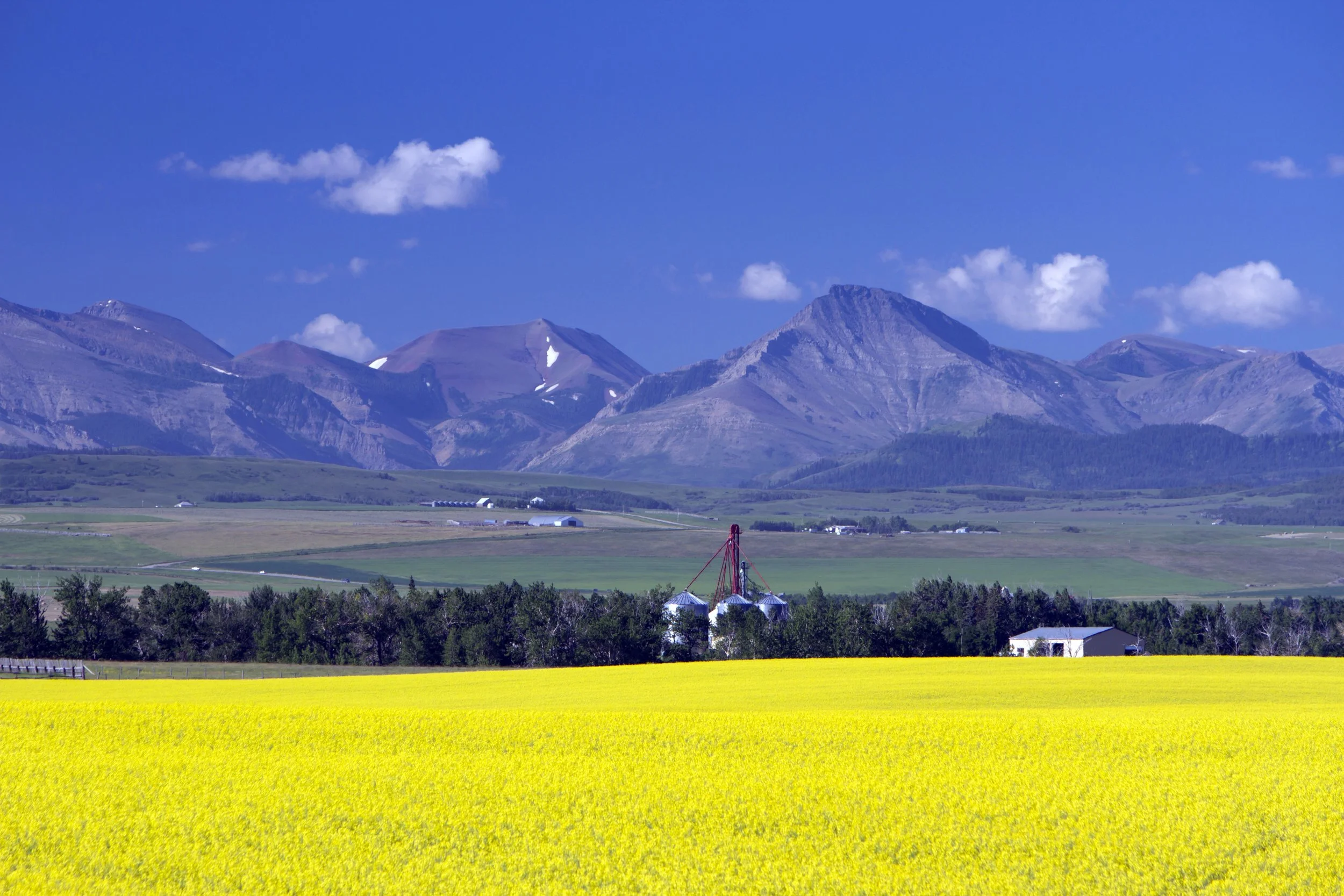


You can search Google Maps, unfold an Alberta road map, or follow the highways north of Edmonton, but you won’t find Coverville. Coverville is the fictional Alberta town I created for my novel, What Remains After. However, its feeling, its atmosphere, is not fictional. It grew out of the Alberta communities I’ve lived in, visited, and loved, particularly Onoway, Spirit River and Rycroft, and Millet.