Why Some Stories Need Time Before They Can Be Told
Please subscribe to my email newsletter for updates on my website and blog. You can do so in the sign-up block at the bottom of this page. Thank you!

Some stories take time to be told.
Content note:
This post reflects on storytelling, timing, and the ethical weight of sharing personal experiences. It includes general references to trauma and the pressure to speak before one is ready, without graphic detail. Please read at your own pace and with care.
In a time of instant gratification across nearly every aspect of modern life, stories—whether books, essays, or screenplays for movies or TV adaptations—are expected to be released quickly, one after another. This is especially true if the story is part of a series. Speed is often regarded as a virtue, seen as a sign that a story and its author are genuine. For some reason, delays are viewed with suspicion, as if someone is hiding something or holding back. But often, the opposite is true.
Why Stories Aren’t Meant to Be Rushed
The assumption is that if a story matters and is worth telling, especially if it’s based on real life, it should be told immediately. The widespread sharing of people’s traumas before they are fully processed and understood has become increasingly common. But urgency does not equate with readiness. Urgency comes from external pressure imposed by a society that demands instant gratification and answers. Readiness, on the other hand, depends on the internal discernment of the storyteller. The author possesses an awareness that when the whole truth, or as close to it as possible, is known, understood, processed, and prepared, it is time to share.
Urgency vs. Readiness in Storytelling
If a story, especially one based on real life, is told too soon, it can distort its meaning. Not because the story is untrue, but because it is incomplete. Everything to be learned, remembered, processed, and understood is not yet available to the storyteller. Therefore, it is not ready to be shared with the reader or listener. More time and silence are needed for the story to fully germinate from a seed into a mature and meaningful expression of truth.
Taking the time to prepare a story preserves its meaning. It’s a form of care. How is this so? This happens through time and silence, during which people are allowed to remember. They can sit with their memories, process them with care, and draw meaning and purpose from them. Then, when the story has fully unfolded, the writer can find the right, careful words to express it. This isn’t about avoiding telling the story, but rather being patient enough to let it unfold and tell itself. Telling the story too soon, before memory and meaning are carefully understood and developed, can harm both the teller and the listener. Time acts as a moderator, a developer, a grace-giver.
The Role of Time and Silence in Storytelling
The wise voice of the book of Ecclesiastes in the Bible wrote, “There is a time for everything, and a season for every activity under the heavens” (3:1). When they wrote this, time was not rushed in the same sense that it is today. It wasn’t the same commodity for sale as it is understood to be now. Time was understood more as a living process, with an appropriate moment for everything that happens. This process was not to be rushed but was to be allowed to unfold and flourish as God designed it.
There Is a Season for Every Story
This idea of a ”season” for everything is a process, not a delay. Think of a farmer seeding his wheat crop. He plants it, waters it, fertilizes it, and waits for the sun, elements, and natural processes to do their work. This takes its own time, and rushing it doesn’t produce a bounty of wheat kernels. If he cuts it too early, he may get silage, rather than grain, but not the beautiful, golden kernels of wheat. It’s not until late summer and harvest time that the crop is ready to be gathered. Seasons arrive in their own time and order. So it is with people’s stories.
I’ve learned that waiting often clarifies what a story is truly about. I write the first draft, thinking it’s about one thing, and then let it sit for a while before revising the manuscript. During that time, an interesting thing happens. I start thinking about what I wrote. I learn new things and see things differently than I did before. When I go back to the draft to rewrite it, I realize that the story isn’t so much about X as I thought it was, but something much deeper. In time, it becomes more about Z.
How Time Deepens a Story’s Meaning
My mind and heart have had time to rethink, remember, and refine. The time I spent between my first draft and my finished manuscript allowed the story to grow and speak for itself. It became much more than just a simple exercise or blog filler. It gained a life of its own.
Why Stories Require Care, Not Speed
Writers, regardless of their subject matter or genre, owe their readers clarity and care in their writing. This doesn’t happen when someone quickly assembles familiar character archetypes or tropes, adds a little action and conflict, and packages it in polished language, then publishes it as quickly as possible for mass distribution. An author’s responsibility is to take the time to ensure the story fully reveals its truth.
When I write, I try to let my story unfold naturally. That takes time—sometimes years. In the end, I believe the story, its author, and the readers are better off for waiting.
This reflection connects closely to my novel, What Remains After, and my broader concept of Redemptive Realism and is part of the Stories of Consequence series on writing, trauma, and redemptive storytelling.
If you’ve been following these reflections and feel drawn to this kind of story, I’m quietly inviting a small group of ARC readers for What Remains After. You’re welcome to reach out if that’s something you’d like to be part of. Reach out in the comments or sign up at this link: ARC Readers.
Stories of Consequence
Fiction that faces the dark, but ends in light.
May God bless you richly,
Pauline J. Grabia
Related Posts:


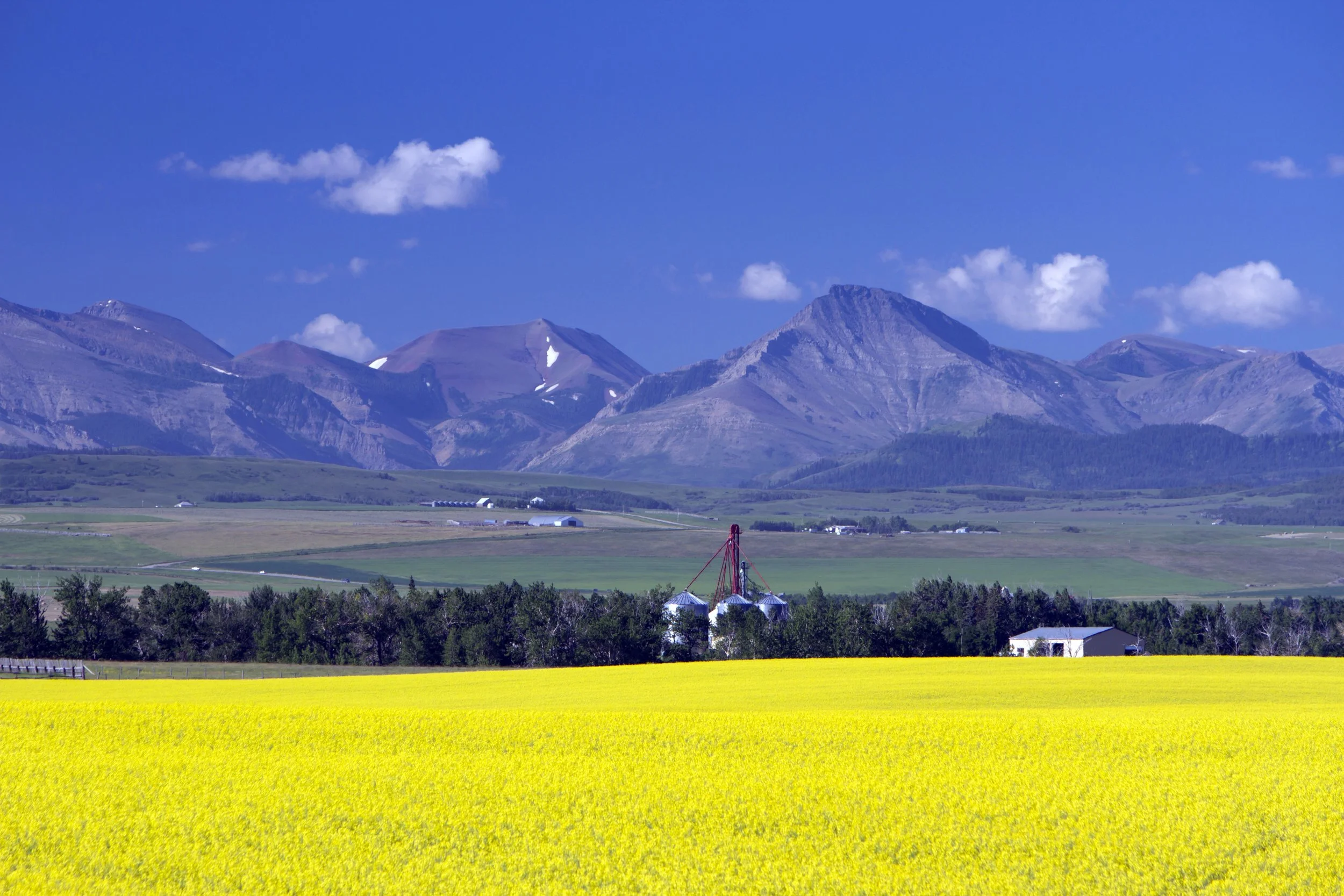


You can search Google Maps, unfold an Alberta road map, or follow the highways north of Edmonton, but you won’t find Coverville. Coverville is the fictional Alberta town I created for my novel, What Remains After. However, its feeling, its atmosphere, is not fictional. It grew out of the Alberta communities I’ve lived in, visited, and loved, particularly Onoway, Spirit River and Rycroft, and Millet.